Navigating Pharmaceutical Cold Chain Regulatory Harmonization ICH Standards for Global Compliance
Learn how pharmaceutical cold chain regulatory harmonization ICH guidelines protect product integrity and streamline global compliance for life science leaders.
Navigating Pharmaceutical Cold Chain Regulatory Harmonization ICH Standards for Global Compliance
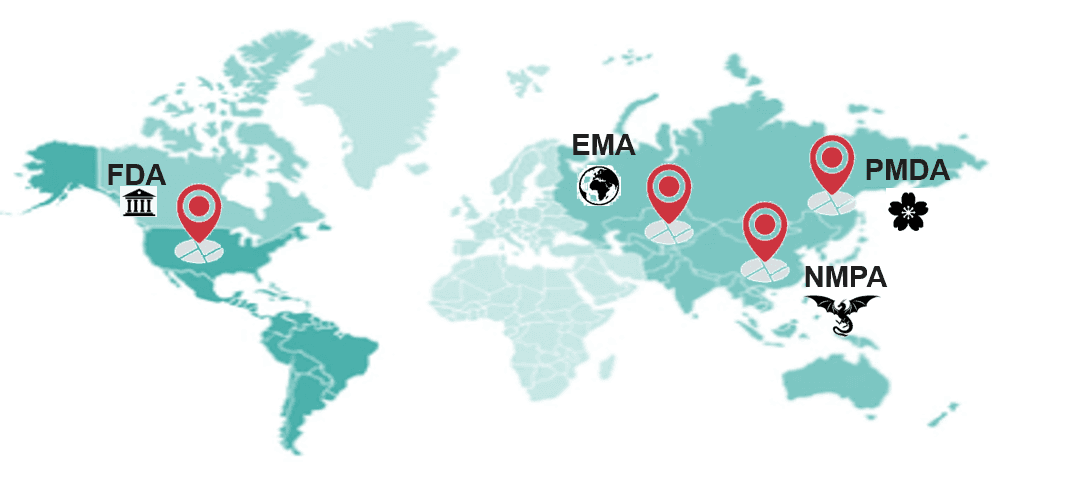
The pharmaceutical industry operates within a complex web of regional regulations that can vary significantly between the European Union, North America, and the Asia-Pacific region. For quality assurance professionals, this fragmentation often results in redundant testing, increased operational costs, and elevated risks during cross-border logistics. When temperature-sensitive products travel through multiple jurisdictions, maintaining a continuous chain of custody requires more than just high-quality hardware; it requires a standardized regulatory framework that ensures safety and efficacy regardless of the point of origin or destination.
In recent years, the move toward pharmaceutical cold chain regulatory harmonization ICH standards has become the primary mechanism for reducing these complexities. By establishing unified scientific and technical criteria, the International Council for Harmonisation of Technical Requirements for Pharmaceuticals for Human Use (ICH) provides a roadmap for manufacturers to achieve global compliance. These guidelines represent a shift away from reactive monitoring toward a proactive, science-based approach that emphasizes Quality Risk Management (QRM) and robust lifecycle oversight.
This article explores the critical guidelines within the ICH framework that govern cold chain operations, the practical implications of Quality Risk Management, and how organizations can leverage these harmonized standards to enhance supply chain resilience. Readers will learn how to navigate the technical requirements of ICH Q1A, Q5C, and Q9 to maintain data integrity and product quality in a globalized market.
Key Takeaways
- Unified ICH standards reduce redundant stability testing across different regulatory regions
- Quality Risk Management (QRM) under ICH Q9 is essential for transport validation
- Biological and biotechnological products require specific stability considerations under ICH Q5C
- Continuous monitoring and data integrity are foundational for harmonized audit readiness
- Harmonization simplifies the transition from clinical phases to commercial distribution
Understanding Pharmaceutical Cold Chain Regulatory Harmonization ICH Quality Guidelines
The cornerstone of global regulatory alignment is the ICH Quality (Q) series, which dictates how drug substances and products must be handled to ensure their molecular stability. For cold chain operations, these guidelines provide the scientific justification for temperature ranges, excursion limits, and storage conditions.
Stability Testing Protocols Under ICH Q1A
The ICH Q1A (R2) guideline, Stability Testing of New Drug Substances and Products, defines the requirements for establishing a product’s shelf life and storage conditions. In the context of the cold chain, this guideline requires manufacturers to demonstrate that the product remains within its defined specifications under the influence of various environmental factors. This involves testing for long-term stability, accelerated stability, and, crucially, the impact of significant change—often defined as a 5-degree Celsius deviation from the intended storage temperature. By following a harmonized testing protocol, companies can use a single stability data set to satisfy the requirements of multiple regulatory bodies, including the FDA and EMA.
Stability of Biotechnological Products Under ICH Q5C
Biotechnology-derived products, such as monoclonal antibodies and vaccines, are particularly sensitive to environmental stresses. ICH Q5C provides specific guidance for these temperature-sensitive entities. Unlike small-molecule drugs, biologicals may lose potency through protein denaturing or aggregation even if temperature limits are only briefly exceeded. The pharmaceutical cold chain regulatory harmonization ICH framework ensures that stability testing for these products includes potency assays and purity checks that are standardized globally. This level of detail is vital for maintaining the biological activity of therapeutics during international air freight and last-mile delivery.
The Role of Risk Management in Pharmaceutical Cold Chain Regulatory Harmonization ICH
Harmonization is not merely about following a checklist of temperatures; it is about adopting a systematic process for the assessment, control, communication, and review of risks to the quality of the medicinal product. This is where ICH Q9 (Quality Risk Management) becomes the primary driver for operational excellence.
Implementing Quality Risk Management (QRM)
Under the ICH Q9 framework, organizations must identify potential failure points in the cold chain. This includes assessing the risks associated with carrier handoffs, warehouse power failures, and extreme ambient weather conditions. By utilizing tools such as Failure Mode and Effects Analysis (FMEA), logistics managers can quantify the severity and probability of a temperature excursion. TrueCold technology supports this harmonized approach by providing the granular data needed to fuel risk assessments, allowing teams to move from anecdotal evidence to data-driven risk profiles. The goal is to ensure that the level of effort, formality, and documentation of the quality risk management process is commensurate with the level of risk to the patient.
Transport Validation and Performance Qualification
Validation in a harmonized environment requires demonstrating that the transport system—including the packaging, the vehicle, and the monitoring technology—is capable of maintaining the required environment. ICH Q10 (Pharmaceutical Quality System) emphasizes the importance of the lifecycle approach. In cold chain logistics, this means that validation is not a one-time event but a continuous process. Organizations must perform Performance Qualification (PQ) across different seasons and routes. By aligning these validation protocols with ICH standards, manufacturers ensure that their transport lanes are recognized as compliant by international inspectors, reducing the likelihood of 483 warning letters or import bans.
Challenges and Implementation Strategies for Global Harmonization
While the goal of pharmaceutical cold chain regulatory harmonization ICH is to create a seamless global standard, local implementation can still present hurdles. Regional differences in infrastructure and interpretation of the guidelines can lead to compliance gaps if not managed carefully.
Bridging Regional GDP and ICH Requirements
While ICH provides the scientific foundation, Good Distribution Practices (GDP) provide the operational execution. Conflicts sometimes arise when a local health authority requires additional documentation not specified in the ICH guidelines. For example, while ICH Q1A provides the stability data, the EU GDP Guidelines or USP <1079> might have stricter requirements for the calibration frequency of sensors. Successful organizations use the ICH standards as a "gold standard" baseline and then layer specific regional requirements on top. This tiered approach ensures that the core quality data is universally acceptable while remaining sensitive to local nuances.
Data Integrity and ALCOA+ Principles
Central to all harmonized standards is the integrity of the data collected during the cold chain journey. Regulatory bodies increasingly rely on the ALCOA+ principles (Attributable, Legible, Contemporaneous, Original, Accurate, plus Complete, Consistent, Enduring, and Available). In a harmonized cold chain, every temperature reading must be verifiable and tamper-proof. Utilizing digital platforms that offer automated data logging and encrypted cloud storage is no longer optional. TrueCold provides the audit trails and electronic signatures required to meet 21 CFR Part 11 and EU Annex 11 standards, ensuring that data collected in one region is trusted by regulators in another.
Modernizing Monitoring Through Harmonized Frameworks
The transition to Continuous Quality Improvement, as outlined in ICH Q10, is driving the adoption of real-time monitoring technology. Traditional passive loggers, which are only read at the end of a journey, are increasingly seen as insufficient for high-value biologics under a risk-based harmonized framework.
Real-Time Visibility and Proactive Intervention
Harmonized standards encourage the use of technology that can prevent excursions rather than just document them. Real-time IoT sensors allow quality teams to monitor shipments as they happen. If a shipment is delayed at a customs border in a high-heat zone, the system can trigger an alert, allowing for re-icing or movement to a refrigerated facility. This proactive intervention aligns perfectly with the ICH Q9 goal of risk mitigation. By integrating these tools, companies reduce the volume of CAPA (Corrective and Preventive Action) reports and minimize product loss, directly impacting the bottom line while maintaining high safety standards.
Digital Twins and Predictive Modeling
Advanced implementations of the pharmaceutical cold chain regulatory harmonization ICH guidelines are now utilizing predictive modeling. By taking the stability data from ICH Q1A and combining it with real-world transport data, companies can create "Digital Twins" of their supply chain. These models can predict how a specific product will react to a projected 4-hour delay at a specific airport. This level of sophistication allows for "release by exception," where products can be safely cleared for use even after minor deviations, provided the stability data—standardized via ICH—supports the decision. This reduces waste and ensures that life-saving medications reach patients faster.
Conclusion
The path to a global, resilient supply chain lies in the rigorous application of pharmaceutical cold chain regulatory harmonization ICH standards. By moving beyond regional silos and adopting the unified scientific principles of ICH Q1A, Q5C, and Q9, pharmaceutical companies can ensure that their products maintain their safety and efficacy profiles from the manufacturing floor to the patient. This harmonization not only reduces the regulatory burden but also fosters innovation by providing a clear, predictable framework for global distribution.
As the industry continues to evolve toward more complex therapies, the reliance on harmonized risk management and high-integrity data will only grow. Maintaining compliance in this environment requires a commitment to continuous monitoring, robust validation, and the adoption of technologies that support the ALCOA+ principles. Ultimately, the successful integration of ICH standards into the cold chain is a strategic imperative for any organization looking to lead in the global pharmaceutical market.
Ready to Strengthen Your Pharmaceutical Cold Chain Regulatory Harmonization ICH Compliance?
TrueCold provides the enterprise-grade monitoring solutions and data integrity tools necessary to meet the most stringent international standards. Our platform simplifies the path to global compliance by automating risk detection and providing audit-ready documentation across your entire supply chain. Schedule a consultation or request a demo to see how TrueCold can help your team achieve seamless regulatory harmonization.
Sources & References
- International Council for Harmonisation. "ICH Q1A (R2) Stability Testing of New Drug Substances and Products." 2. https://www.ich.org/page/quality-guidelines
- International Council for Harmonisation. "ICH Q5C Quality of Biotechnological Products: Stability Testing of Biotechnological/Biological Products." 4. https://www.ich.org/page/quality-guidelines
- International Council for Harmonisation. "ICH Q9 (R1) Quality Risk Management." 6. https://www.ich.org/page/quality-guidelines
- U.S. Food & Drug Administration. "Guidance for Industry: Q1A(R2) Stability Testing of New Drug Substances and Products." 8. https://www.fda.gov/regulatory-information/search-fda-guidance-documents
- European Medicines Agency. "Scientific Guidelines on Quality: Stability." 10. https://www.ema.europa.eu/en/human-regulatory-overview/research-development/scientific-guidelines
- World Health Organization. "Annex 9: Model Guidance for the Storage and Transport of Time- and Temperature-Sensitive Pharmaceutical Products." 12. https://www.who.int/teams/health-product-and-policy-standards/standards-and-specifications
- International Society for Pharmaceutical Engineering (ISPE). "ISPE Good Practice Guide: Cold Chain Management." 14. https://ispe.org/publications
- National Center for Biotechnology Information. "Stability of Biotechnological/Biological Products in the Cold Chain." 16. https://pubmed.ncbi.nlm.nih.gov
Ready to Transform Your Cold Chain?
Learn how TrueCold can help you implement the solutions discussed in this article and optimize your temperature-controlled logistics.